GE appliance owners can download digital copies of their manuals for operating and cleaning self-cleaning gas and electric ovens, like models JGB660 and PGB935.
These manuals provide essential instructions for safe and effective use of the self-clean feature, which utilizes high temperatures to eliminate food residue.
Understanding Self-Cleaning Technology
GE self-cleaning ovens employ a high-temperature cycle, reaching temperatures sufficient to pyrolyze food soils – essentially burning them away to a fine ash. This process, detailed in the owner’s manual, eliminates the need for manual scrubbing.
The self-clean feature utilizes the oven’s insulation, which may release a minimal amount of carbon monoxide during operation; proper ventilation, as outlined in the instructions, is crucial. Understanding this technology ensures safe and efficient oven maintenance.
Benefits of a Self-Cleaning Oven
GE self-cleaning ovens offer significant convenience, eliminating arduous manual scrubbing and harsh chemical cleaners. The owner’s manual highlights this time-saving feature, allowing users to effortlessly maintain a clean oven interior.
This technology ensures a hygienic cooking environment, removing baked-on food residue effectively. Furthermore, the self-clean cycle reduces odors and simplifies oven care, as detailed in the provided instructions, enhancing overall kitchen cleanliness.
Safety Precautions Before Self-Cleaning
The manual stresses safety: ensure proper ventilation during the self-clean cycle, remove oven racks and accessories, and address potential fumes.
Ventilation Requirements During the Cycle
GE manuals emphasize the importance of ventilation during the self-cleaning cycle. The high temperatures involved release a small amount of carbon monoxide from the fiberglass insulation.
To minimize exposure, it is crucial to open windows or use a ventilation system. Proper airflow helps dissipate any fumes and ensures a safe cleaning environment.
The manual explicitly states that adequate ventilation is a key safety precaution to be observed throughout the entire self-clean process.
Removing Oven Racks and Accessories
GE self-cleaning oven manuals instruct users to remove all oven racks, broiler pans, and any other accessories before initiating the self-clean cycle.
These items cannot withstand the extremely high temperatures reached during cleaning and may become discolored or damaged. Removing them ensures optimal cleaning performance and prevents potential hazards.
The manual clearly outlines this preparatory step as essential for a safe and effective self-cleaning experience.
Addressing Potential Fumes and Odors
GE self-cleaning oven manuals acknowledge that a small amount of carbon monoxide may be released during the high-temperature cleaning cycle due to fiberglass insulation.
To minimize exposure, proper ventilation is crucial; opening windows is recommended. Some fumes and odors are normal, but excessive smells warrant immediate attention and potentially halting the cycle.
The manual emphasizes the importance of adequate ventilation for a safe self-cleaning process.
Step-by-Step Self-Cleaning Instructions
GE manuals detail initiating the self-clean cycle, setting the duration, and locking the control panel for safety during the high-temperature process.
Initiating the Self-Clean Cycle
GE oven manuals instruct users to ensure the oven is empty before starting the self-clean cycle. Press the “Self Clean” button on the control panel; some models require selecting a cleaning level first.
The oven door will automatically lock for safety as the internal temperature rises. Refer to your specific model’s manual for detailed steps, as button layouts and features can vary. Always follow the instructions carefully to ensure proper operation and prevent damage.
Setting the Cleaning Duration
GE oven manuals detail that cleaning duration options vary by model, typically ranging from 2 to 4 hours. Some ovens offer a “Light Clean” option for lighter soils, reducing cycle time.
Consult your owner’s manual to determine the appropriate duration based on the level of cleaning needed. Longer cycles are recommended for heavily soiled ovens. The control panel will display the selected cleaning time before the cycle begins, ensuring user confirmation.
Locking the Oven Control Panel
GE self-cleaning ovens feature a control lock function activated during the self-clean cycle for safety. The manual explains this lock prevents accidental operation while the oven reaches high temperatures.
The control panel automatically locks when the self-clean cycle is initiated and remains locked until the oven cools sufficiently. Attempting to interrupt the cycle will be prevented by this safety feature, as detailed in the owner’s manual.
Post-Cleaning Procedures
After the self-clean cycle, allow the oven to cool completely before wiping away any remaining ash residue, as outlined in the manual.
Allowing the Oven to Cool Down
GE manuals emphasize the critical importance of allowing the oven to cool down completely after the self-clean cycle concludes. Do not attempt any cleaning or rack replacement while the oven is still hot.
The high temperatures reached during the cycle necessitate a thorough cooling period to prevent burns and ensure safety. This cooling process can take a significant amount of time, potentially several hours.
Always verify the oven is cool to the touch before proceeding with post-cleaning tasks, as detailed in your specific model’s instruction guide.
Wiping Away Ash Residue
Following the cool-down period, GE manuals instruct users to wipe away the fine ash residue remaining inside the oven. A damp cloth is generally sufficient for this task, effectively removing the remnants of the self-clean cycle.
Avoid abrasive cleaners, as they could damage the oven’s interior surface. Ensure all ash is removed for optimal performance and to prevent any lingering odors.
Refer to your specific model’s instruction guide for detailed cleaning recommendations and safety precautions.
Replacing Oven Racks and Accessories
GE manuals emphasize that oven racks and accessories should only be replaced after the oven has completely cooled following the self-clean cycle. Carefully reinstall the racks, ensuring they are securely positioned on their supports.
Check for proper alignment before use. Reintroduce any removed oven stones or baking sheets. Consult your owner’s manual for specific rack placement diagrams and accessory guidelines.
Cleaning Oven Racks
GE manuals detail methods for cleaning oven racks, including soaking them for easier removal of baked-on residue and food particles.
Methods for Cleaning Oven Racks
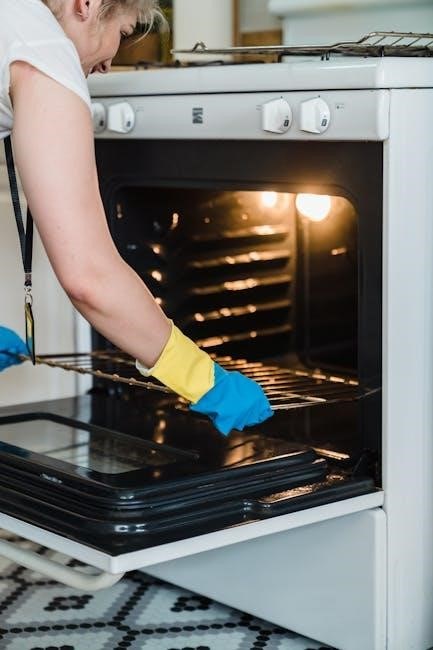
GE manuals suggest several approaches for tackling dirty oven racks. One effective method involves soaking the racks in a solution of hot water and dish soap.
Allowing them to soak overnight loosens baked-on food, making scrubbing easier. Alternatively, a paste of baking soda and water can be applied, left for a period, and then rinsed.
For stubborn residue, commercial oven rack cleaners may be used, following the product’s safety guidelines carefully. Always ensure thorough rinsing after using any cleaning agent.
Soaking Oven Racks for Easier Cleaning
GE manuals recommend soaking oven racks as a primary step for easier cleaning. Fill a bathtub or large utility sink with hot water and a generous amount of dish soap.
Submerge the racks completely, ensuring all surfaces are covered. For heavily soiled racks, consider adding ½ cup of baking soda to the soaking solution.
Allow the racks to soak overnight, or for at least several hours, to loosen baked-on food particles before scrubbing. This significantly reduces cleaning effort.
Downloading the GE Oven Manual
GE offers convenient online access to download owners manuals, including those for self-cleaning ovens, for quick reference and detailed instructions.
Accessing Digital Copies of Manuals
GE Appliances provides easy access to digital versions of your oven’s owner’s manual online. You can download these resources directly from the GE Appliances website, offering convenient access to instructions for operating and maintaining your self-cleaning oven.
Printing is also an option, though digital copies are readily available. These manuals contain vital safety information, operating guidelines, and troubleshooting tips specific to your model.
Follow onscreen instructions within the SmrtHQ App to connect your GE oven and access support materials.
Finding Model-Specific Instructions
GE self-cleaning ovens, such as the JGB660, JGB735, and PGB935, may have slightly different features. Therefore, it’s crucial to locate the manual specifically for your oven model. The manual details the self-clean cycle, safety precautions, and troubleshooting steps tailored to your appliance.
Download the correct manual from the GE Appliances website, ensuring you have the precise instructions for optimal and safe operation of your oven’s self-cleaning function.

Troubleshooting Common Issues
The manual details error codes appearing during the self-clean cycle, issues with reaching temperature, and potential smoke occurrences, offering solutions for GE ovens.
Error Codes During Self-Cleaning
GE oven manuals outline specific error codes that may appear during the self-cleaning cycle, signaling potential problems. These codes provide diagnostic information, helping users identify issues like a faulty door latch or sensor malfunction.
The manual instructs users to consult a detailed code list to understand the meaning of each error. It also advises on basic troubleshooting steps, such as ensuring proper ventilation or contacting GE service if the error persists, preventing further complications.
Oven Not Reaching Cleaning Temperature
GE oven manuals address scenarios where the self-cleaning cycle fails to reach the necessary high temperature. This could stem from an inadequate power supply or a malfunctioning heating element. The manual advises verifying the electrical connection and breaker.
If the issue continues, it suggests contacting GE appliance service for professional diagnosis and repair, as attempting self-repair could be hazardous. Proper temperature is crucial for effective cleaning;
Smoke During the Self-Clean Cycle
GE oven manuals acknowledge that some smoke during the self-clean cycle is normal, resulting from burning food residue. However, excessive smoke warrants attention. The manual emphasizes ensuring proper ventilation during the cycle to minimize exposure to fumes.
It also notes that fiberglass insulation can release a small amount of carbon monoxide, so adequate ventilation is vital. If heavy smoke persists, the cycle should be stopped and the oven inspected.
Maintaining Your GE Self-Cleaning Oven
GE manuals recommend regular wipe-downs between self-clean cycles to prevent food spills and splatters, ensuring optimal performance and extending the oven’s lifespan.
Regular Wipe-Downs Between Cycles
GE manuals strongly advise performing regular wipe-downs of your self-cleaning oven’s interior between self-clean cycles. This proactive approach minimizes baked-on food residue, reducing the intensity and frequency needed for the high-temperature self-clean function.
Simply use a damp cloth and mild detergent to wipe down the oven walls, floor, and door after each use or as needed. This simple habit significantly contributes to maintaining a cleaner oven and prolonging its overall performance.
Preventing Food Spills and Splatters
GE oven manuals emphasize preventative measures to minimize food spills and splatters during cooking. Utilizing oven-safe cookware with high sides helps contain liquids and prevent messes. Covering dishes, especially those prone to bubbling over, is also highly recommended.
Promptly addressing any spills as they occur, even during the cooking process, reduces the amount of baked-on residue requiring removal during self-cleaning or manual cleaning efforts.

Understanding the Self-Clean Lock Feature
GE oven manuals detail how the self-clean lock automatically engages during the cycle for safety, preventing door opening due to high temperatures.
How the Lock Works
GE oven manuals explain that the self-clean lock engages automatically when the self-clean cycle begins, securing the oven door for user safety.
This locking mechanism is activated by the high temperatures reached during the cleaning process, preventing accidental opening.
The lock remains engaged until the oven cools down to a safe temperature, as detailed in the manual’s operating instructions.
Attempting to force the door open while locked could cause damage or injury, so patience is crucial.
Safety Implications of the Lock
GE oven manuals emphasize the self-clean lock’s critical role in preventing burns from the extremely high temperatures generated during the cycle.
The lock ensures the door remains sealed, protecting users and preventing accidental contact with the hot interior.
Never attempt to disable or bypass this safety feature, as outlined in the manual’s safety instructions.
Understanding the lock’s function is vital for safe operation and avoiding potential hazards during self-cleaning.

Carbon Monoxide Considerations
GE manuals state self-cleaning ovens emit a small amount of carbon monoxide; proper ventilation minimizes exposure during the cleaning cycle.
Minimizing Exposure During Cleaning
GE manuals emphasize the importance of ventilation when utilizing the self-clean cycle, as the fiberglass insulation releases a minimal amount of carbon monoxide during operation.
To reduce potential exposure, ensure adequate room ventilation by opening windows or using an exhaust fan during the cycle.
Avoid operating the oven in confined spaces, and keep people and pets away from the kitchen during the self-cleaning process.
Following these guidelines promotes a safer cleaning experience.
Importance of Proper Ventilation
GE oven manuals consistently highlight proper ventilation as a critical safety measure during the self-clean cycle. This is due to the release of a small quantity of carbon monoxide from the fiberglass insulation.
Adequate ventilation minimizes potential exposure, protecting both people and pets.
Opening windows or activating an exhaust fan effectively disperses any fumes generated during the high-temperature cleaning process.
Prioritizing ventilation ensures a safer operating environment.

GE SmartHQ App Integration
GE ovens can connect to the SmartHQ app, allowing remote monitoring and control, as detailed in the manual. Follow onscreen instructions for connection.
Connecting Your Oven to the App
To connect your GE oven to the SmartHQ app, first download the app and create an account. Then, follow the onscreen instructions within the app to begin the pairing process. The manual guides you through ensuring your oven is in pairing mode, typically initiated through the control panel.
The app will search for compatible appliances; select your oven when it appears. You may need to enter your Wi-Fi network credentials to complete the connection. Once connected, you can remotely monitor and control your oven.
Remote Monitoring and Control
Once your GE oven is connected to the SmartHQ app, you gain remote access to various functions. The app allows you to monitor the oven’s status, including current temperature and remaining cook time. You can also start or stop the self-clean cycle remotely, offering convenience and control.
Receive notifications about the oven’s operation directly on your smartphone. The app provides a user-friendly interface for managing your oven from anywhere with an internet connection, as detailed in the manual.
Specific Model Variations
GE ovens exhibit differences in self-clean features; always consult your specific owner’s manual for detailed instructions tailored to your model’s capabilities.
Differences in Self-Clean Features
GE self-cleaning ovens aren’t uniform; variations exist across models regarding cycle duration, temperature settings, and locking mechanisms. Some ovens offer light, medium, and heavy self-clean options, while others have a single setting.
The instruction manual details these specifics. Newer GE ovens with SmartHQ integration may offer remote control of the self-clean cycle via the app. Always refer to your model’s manual for precise instructions and safety guidelines, as features differ significantly.
Consulting Your Owner’s Manual
Your GE oven’s instruction manual is the primary resource for self-cleaning. It contains model-specific instructions, safety precautions, and troubleshooting tips. Download a digital copy from the GE Appliances website for convenient access.
The manual outlines proper ventilation requirements, rack removal procedures, and what to do if error codes appear during the cycle. Ignoring these instructions could damage the oven or pose a safety risk. Always prioritize the manual’s guidance.
Additional Cleaning Tips
Refer to your manual for detailed instructions on cleaning the oven door, ensuring a sparkling finish alongside the self-cleaning cycle’s benefits.
Cleaning the Oven Door
GE manuals emphasize regular cleaning of the oven door for optimal appearance and function. While the self-clean cycle addresses interior soils, the door requires separate attention.
Use a non-abrasive cleaner specifically designed for glass surfaces to avoid scratching. Gently wipe down the glass with a soft cloth, removing any splatters or residue.
For stubborn stains, a paste of baking soda and water can be applied, left for a short period, and then rinsed thoroughly. Always consult your owner’s manual for specific recommendations.